What Does a Sewer Camera Inspection Show?
What Does a Sewer Camera Inspection Show?
Most homeowners never think about their sewer line until something goes wrong. A backup in the basement, a drain that won’t clear no matter how many times you snake it, a patch of the yard that’s inexplicably soggy in the middle of summer. By that point, the easy fixes are already behind you.
A sewer camera inspection, also known as CCTV drain inspection, is how you find out what’s actually down there. Not a guess based on symptoms, not an estimate, actual footage of the inside of your pipes. If you’ve never had one done before, here in this blog we will answer what does a sewer camera inspection show, what it misses, and what you’re supposed to do with the results.

What Does a Sewer Camera Inspection Show & How the Inspection Actually Works
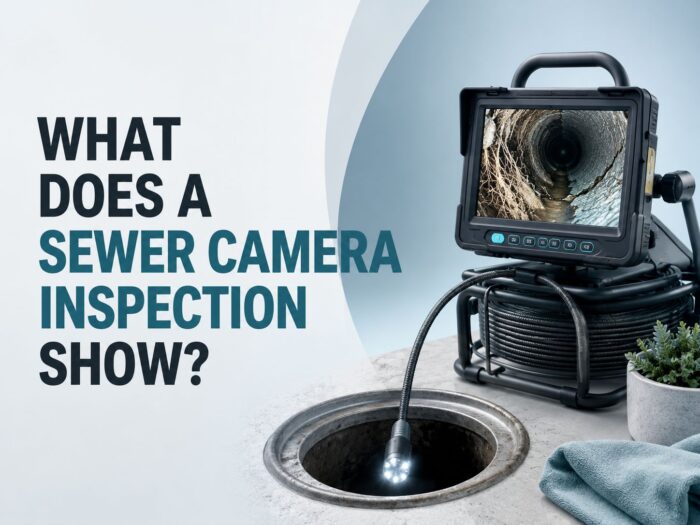
A technician feeds a waterproof camera on a flexible cable into the pipe through an access point, a cleanout, floor drain, or sometimes a pulled toilet. The camera transmits live video to a monitor while a built-in locator tracks distance, so any problem that shows up can be mapped to its exact spot underground. The whole thing takes about an hour for a standard residential line, and most inspections are recorded so you leave with footage you can reference later.
Condition findings are graded against standards set by NASSCO (National Association of Sewer Service Companies), which matters because it means two different contractors looking at the same footage should arrive at the same assessment, not one calling something minor and another calling it urgent.
What Shows Up on the Footage
Here’s where it gets specific. The camera doesn’t just confirm “there’s a problem.” It shows you the type of damage, where exactly it is, and how far along it’s gotten. Those three things together are what drives the repair decision.
Cracks and fractures are the most common finding in Ontario, particularly in homes built before the 1970s. A hairline crack doesn’t cause a backup on its own, but it’s an open door for tree roots and groundwater over time. You can see on the footage how long the crack runs and whether it’s progressing through the pipe wall or sitting at the surface.
Root intrusion looks exactly as bad as it sounds. Roots follow moisture, any gap at a joint or crack in the pipe and they’re in. What the camera shows you is how far they’ve gotten. Fine feeder roots near a fitting are a very different situation from a root mass that’s grown dense enough to block flow. Both show up clearly; both have different timelines for when they become urgent.
Joint separation is something we see a lot in Ontario homes, where freeze-thaw cycles do years of quiet damage to buried pipes. When a joint shifts out of alignment, it doesn’t always cause an immediate backup, it just sits there letting roots in, letting soil wash through, letting wastewater seep out into the ground. The footage shows the size of the gap and which direction the pipe has offset.
Corrosion is mainly a cast iron issue. Those pipes corrode from the inside, and the camera shows you where you’re dealing with surface scaling versus actual wall thinning. That distinction matters because a heavily corroded section may not be a candidate for lining, there needs to be enough pipe wall left for a liner to bond to.
Bellied or sagging pipe is one of the trickier findings because it changes what repair options are on the table. A belly is a section that’s dropped lower than the rest of the line, creating a low spot where wastewater pools instead of flowing out. You can see the standing water on footage. The reason this matters for repair decisions is that CIPP lining follows the existing grade of the pipe, if the belly is severe, lining it just permanently preserves the problem. That’s a situation where the camera inspection changes the whole recommendation.
Blockages and buildup grease, debris, foreign objects, show up clearly too. The camera lets you see exactly where a partial blockage is forming and how much of the pipe’s interior is still open. This is useful before a backup actually happens, because by the time something backs up into the house the blockage has usually been building for a while.
One thing the footage also shows is what the pipe is actually made of, which isn’t always obvious from the outside. Clay, cast iron, PVC, each material ages differently and fails differently. Knowing what you’re working with helps estimate how fast conditions are likely to change.
For example, here’s a few cases we’ve worked on. In one instance at the Coca Cola bottling facility, the sanitary pipes experienced constant backups, prompting the facility manager to investigate the cause. A drain line camera inspection revealed that the bottoms of the pipes were completely missing due to severe corrosion. These failing underground pipes are located beneath millions of dollars’ worth of machinery for the beverage production line, which could not be moved or damaged. Thankfully, with our state-of-the-art trenchless sewer line replacement option using cured-in-place pipelining, we were able to essentially replace the underground pipes with new ones that will last nearly 50 years, without the need for costly digging, suspension of operations and other inconveniences.
What the Camera Can’t Tell You
A camera inspects the inside of the pipe. It has no way of seeing what’s happening on the outside, soil voids that have formed around the pipe, external corrosion, or how much groundwater pressure is building against the wall. If a slow leak has been washing soil into the line over time, the camera shows you the result, a cavity, missing pipe wall, but not the external conditions that caused it. For that level of assessment you’d need sonar profiling or ground-penetrating radar.
Flow performance is another gap. A pipe can look structurally intact on footage and still drain poorly because of improper slope. The camera alone doesn’t confirm that you need a separate flow test.
Worth knowing before you book one: the inspection is a diagnostic, not a repair quote. What it gives you is the information to make a good repair decision. The footage is the starting point, not the endpoint.
What To Do With Your Sewer Camera Inspection Results
The footage means different things depending on what it shows.
Minor findings like a small root intrusion near a joint, a hairline crack, early-stage corrosion often does not need immediate action. The technician will tell you what to watch for and suggest a timeline for re-inspection. A lot of homeowners are surprised to find out a problem they were anxious about can wait.
Moderate damage is where lining usually makes sense. Established root growth, a corroded section, joint separation that hasn’t turned into a full offset or if the pipe still holds its shape, a liner can go in through the existing access points without digging anything up. The camera inspection is what determines whether a pipe is actually a candidate for lining. You can’t skip straight to CIPP as liner thickness, resin selection, and the prep work all depend on what the footage shows.
Severe damage like full collapse, major offset, multiple blocked sections, typically means the pipe can’t be lined and needs either targeted excavation or full replacement. A camera inspection that turns up that finding isn’t a bad result. It’s a lot better than getting partway through a lining job and finding out then.
When It Makes Sense to Book One
You don’t need an active problem to justify a camera inspection. There are a few situations where it’s particularly worth doing.
Before buying a house is near the top of the list. Standard home inspections don’t include a sewer scope, and older Ontario homes, especially anything with clay or cast iron pipes from the 1950s through early 1970s are common candidates for hidden issues. A camera inspection before closing gives you negotiating leverage if something turns up, or just peace of mind if it doesn’t. The cost is a fraction of what a surprise repair runs after you’ve already moved in. If an inspection does uncover significant damage, it can also connect you to rebate programs, the City of Toronto’s Basement Flooding Protection Subsidy Program covers certain qualifying repairs for eligible homeowners.
If you’ve had the same drain snaked more than once without a lasting fix, that’s another good reason. Snaking clears the symptom. The camera shows what keeps causing it.
Conclusion
Property managers and building owners use periodic inspections as a maintenance tool. When asking, what does a sewer camera inspection show? The answer is often issues that would otherwise only surface as emergencies. Cracks, root intrusion, blockages, deteriorating pipe sections, and other developing problems often appear quietly on camera footage long before they cause damage, backups, or tenant complaints.
Ontario Pipe Lining provides sewer camera inspections for residential and commercial properties across Ontario. We use high-definition equipment, provide recorded footage, and walk you through what we found and what, if anything, needs to happen next. Reach out to book an inspection or ask questions about your specific situation.
Questions We Hear Regularly
1. How much does it cost?
Most residential inspections in Ontario come in between $200 and $600. Line length, access difficulty, and whether the job includes a written condition report all affect the price. Still considerably less than discovering a serious problem after the fact.
2. Do I need to be home?
Yes, at least to start. The technician needs access to an interior drain or cleanout. After that, most of the work is outside or at the monitor but someone has to be there to let them in.
3. Can the camera find a leak?
It can show signs of a leak from the inside: infiltration, wall damage, soil visible through a crack. It can’t confirm an active leak rate or see what’s happening on the outside of the pipe. If footage suggests a leak, a technician will tell you what additional testing would confirm it.
4. What’s the difference between a sewer camera inspection and a sewer scope?
Nothing, same equipment, same process. Real estate agents tend to say “sewer scope.” Plumbers and lining contractors say “sewer camera inspection” or “drain camera inspection.”
5. If something is found, do I have to fix it immediately?
Not always. Minor findings often have some runway. A straight-talking contractor tells you honestly what’s urgent and what can wait. For reference on how long pipe lining lasts once repairs are done, quality CIPP work holds up for 50 years or more under normal conditions, so addressing moderate damage sooner rather than later tends to pay off.
6. How often should I get one done?
Every 5 to 10 years is reasonable for most homes with no known issues. Mature trees near the sewer line, clay or cast iron pipes, or any history of backups, push the interval closer to every 2 to 3 years. Annual inspections make sense for property managers running older multi-unit buildings.